


Context of the Narrative Essay
Martin Luther King jr. often spoke of a day in the future when he hoped that his children would be judged not by their skin color but instead by their character.
Write a narrative essay about a moment in your life when you were judged by something other than the content of your character.
Utilize narrative techniques to develop experiences, events, and characters
What Is a Personal Narrative Essay?
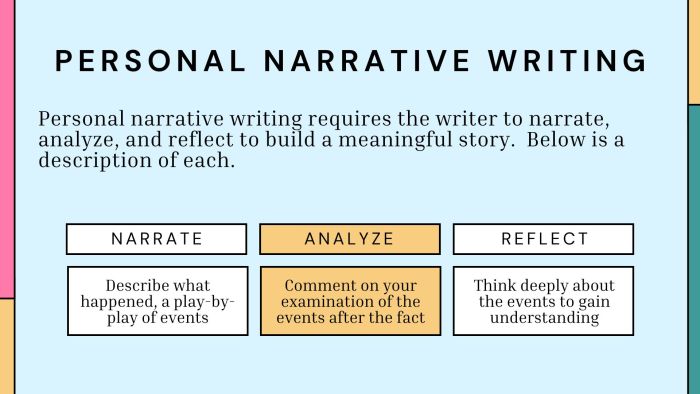
A personal narrative essay is a first-person prose piece in which the writer recounts a real experience from their own life with the goal of revealing a personal or universal truth. It combines storytelling with reflection, meaning the writer does not simply describe what happened but also explores what the experience meant to them.
As explained in Purdue OWL's creative nonfiction resources, these essays are "anecdotal, experiential, and personal," giving students a creative and often moving way to express themselves.
How to Write a Narrative Essay - Step-By-Step Guide with Examples
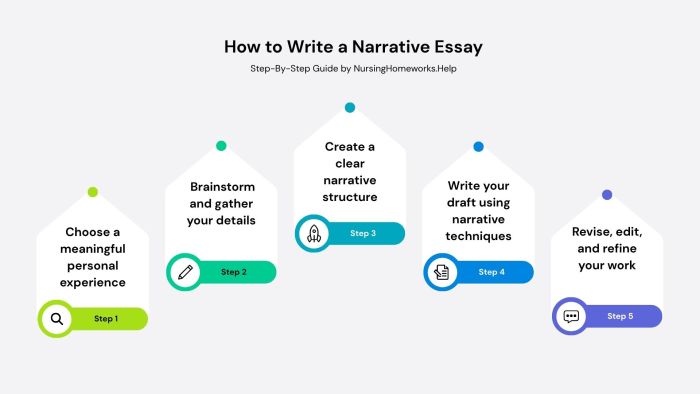
Step 1: Choose a meaningful personal experience
Begin with an event in your life that has a real emotional charge and personal meaning to you. Topics that are most suitable are those that something changed, where a belief was challenged, a lesson learned or where a relationship changed in a significant manner.
For example, a writer could select a time that they was unfairly judged in school as it has been shown in this essay, since this has a personal meaning and a universal one.
Step 2: Brainstorm and gather your details
Before you begin drafting your essay, write down everything you can remember about the experience; such as the people involved, what was said, how things looked and felt, and what you were thinking at every moment.
Filtering and organizing should not be done at this point; just get all the relevant information so that you can have plenty of material to play with. Powerful stories are constructed using concrete sensory information, rather than broad reports, and the more concrete your notes, the more powerful your final draft will be.
Step 3: Create a clear narrative structure
Arrange what you have brainstormed into a start, middle and end which leads to a point of revelation or transformation. The first paragraph should be a hook to the reader, the second paragraph should build the conflict and characters, and the final paragraph should provide the reflection or revelation that will provide the story the meaning.
As noted in the narrative essay writing guide, each narrative essay requires a thesis - not a formal argument, but a sense of why this very story is important and what it tells us about the writer or the world.
Step 4: Write your draft using narrative techniques
To make your story come alive on the page, use dialogue, vivid description, pacing, and a steady first-person voice. Demonstrate what occurred with scenes, not by telling the reader how to react to the events.
For example, rather than saying “I felt discriminated against,” explain the pause of the teacher, the hand that was not raised, the circle that was closed in the hallway - make the reader experience the discrimination with you.
Step 5: Revise, edit, and refine your work
Read through your draft aloud and pay attention to any areas that the story is not flowing, the language is unclear or the reflection is awkward. Eliminate any words or passages that lack emotional or narrative value to the work.
Then ask a peer or mentor to review it and provide feedback, since external readers are likely to spot areas of unclarity and disconnect that the author can no longer see when dealing with the same text after so much time of exposure.
Sample Personal Narrative Essay on The Weight of a Name
More Than a Uniform: When Labels Silence Your Voice
I was sixteen years old the first time I truly understood what it meant to be judged before I even opened my mouth. The world had already decided who I was, based on a single visible detail, and nothing I said or did in those moments seemed to matter.
I had put on my school uniform that morning like any other student, but I wore something extra that day; a hijab, the Islamic head covering I had recently chosen to wear as part of my faith. It was a decision I had made carefully, proudly, and with deep personal conviction. What I had not prepared for was the way that one choice would change how the world looked at me the very same day.
The Classroom Felt Different That Tuesday Morning
My name is Amara, and I had always been a strong student in my science class. My teacher, Mr. Hendricks, was a tall man with wire-rimmed glasses and a habit of tapping his pen when he was thinking hard. He had known me for two full years, watched me answer questions and lead group discussions without hesitation. On the morning I walked into class wearing the hijab for the first time, something shifted in the air almost immediately. Mr. Hendricks looked up from his desk, paused for a second too long, and then smiled in a way that did not quite reach his eyes. I sat down in my usual seat in the front row, opened my notebook, and waited for the lesson to begin the way I always did.
The first question he asked the class was about cellular respiration, a topic I had studied thoroughly the night before my test. My hand shot up fast, the way it always did when I was confident about an answer. Mr. Hendricks looked around the room and called on David, who sat in the third row and had his hand halfway raised. I told myself it was nothing. I put my hand down and waited again. The next question came, and again my hand was the first one up. Again, Mr. Hendricks chose someone else, this time a girl named Sophie who had barely been paying attention moments before. I had a vague uneasiness that started an aching in my chest, like it was a stone slowly descending into still water.
The Moment That Confirmed What I Already Felt
The third time my hand was left unnoticed, I could no longer attribute this fact to coincidence or bad eyesight. The classroom felt like a different place now, smaller and somehow colder than it had ever been before. A boy behind me leaned forward and whispered, "He has been weird like this since that assembly last week." I did not know what had happened at that assembly, but the whisper confirmed one painful thing; others had noticed too. I stared at the front of the room and felt something complicated happening inside me, a mix of hurt and anger and a strange, stubborn determination all rising at once.
After class, I walked up to Mr. Hendricks while other students filed out through the door. I asked him politely if there was something wrong with my participation. He looked caught off guard, shuffled some papers on his desk, and told me everything was fine. His words said one thing, but his eyes said another. I left the classroom carrying a weight that had not been there when I entered the school building that morning. It was the weight of being seen as something other than what I actually was; a curious, capable, and hardworking student.
The Hallway Had Its Own Kind of Silence
The rest of that school day moved in a strange kind of slow motion for me. In the hallway between classes, I noticed things I had never paid attention to before. A group of girls I had eaten lunch with for three years kept their conversation going as I approached, but something small shifted; their circle closed just slightly, the way a door eases shut without fully latching. My best friend, Kezia, saw my face and pulled me aside near the water fountain. "You look like you are carrying something heavy," she said. She was right. I was carrying the unfamiliar burden of being judged by something completely outside of my character, my mind, and my heart.
Kezia listened as I described what had happened in science class and in the hallway. She squeezed my hand and told me something I have never forgotten: "The problem is not you, Amara. The problem is that they are reading the cover and skipping the whole book." Her words cracked something open in me that afternoon.
I realized that the discrimination I had experienced was not only personal; it was part of a much wider pattern that many people faced every single day. Some faced it because of their skin color, their accent, their disability, or their gender. I was now living in a small corner of that very large and painful experience.
Read More About multiracial discrimination
What I Did with the Weight I Was Carrying
I did not go home and cry that evening, though a part of me wanted to. Instead, I sat at my desk and wrote down every single thing I had felt during that school day. I wrote about Mr. Hendricks and his pen-tapping silence. I wrote about the closing circle of girls in the hallway and the weight of Kezia's kind words near the water fountain. Writing helped me understand that the discrimination I had experienced, while rooted in visible religious identity, was connected to the same roots that Martin Luther King Jr. had spoken of so powerfully; the tendency to judge people by what they look like rather than who they actually are. King dreamed of a world where character would matter more than appearance, and that dream still felt very far away inside my school hallways.
The following week, I raised my hand again in Mr. Hendricks' class, and I kept raising it every single day. I answered questions whether I was called on or not. I aced every test and turned in every assignment on time with careful, detailed work. There was something stubborn and bright burning inside me, and I was not willing to let anyone's assumptions define the story of who I was. Slowly, almost reluctantly, the atmosphere in that classroom began to shift. Mr. Hendricks started calling on me again, at first occasionally, and then with something closer to the regularity I had known before.
The Lesson That Stayed Long After the School Year Ended
At the conclusion of such a school year, I had acquired something that no textbook had ever taught me. I was taught that discrimination does not necessarily come in a loud, insulting, and shouting manner. At other times it is gentle, expressed in unacknowledged hands and closed circles and closed eyes that are not quite looking at you. It comes in between the words people say and what they actually mean. It exists in pauses that are one second too long and in the little things that people reorganize their world to keep you at a safe distance. Understanding this made me more careful, more compassionate, and more determined to see people fully; to read every page of every book before deciding anything about its worth.
Martin Luther King Jr. spoke of judging people by the content of their character, and those words ring true not just as a historical ideal but as a daily practice we must all choose actively. On that Tuesday morning when I walked into school wearing my hijab for the first time, my character had not changed by even a single degree. I was still Amara; curious, hardworking, passionate about science, loyal to my friends, and full of questions about the world. The only thing that had changed was the way certain people chose to see me. That experience lit a quiet fire in me that has never gone out, a fire that reminds me every day that character is something no one can take from you, no matter how they choose to look at you.
Also Read Bob Jones University Weird Rules to learn about the use of strict rules and policies in school.
Essay Comparison Table: Narrative vs. Other Essay Types
Unlike the descriptive essay on Black Square as a Piece of Art, narrative essay is personal and provides stories about personal events, creating emotional connections.
Feature | Narrative | Argumentative | Expository | Descriptive | Persuasive | Reflective |
Purpose | Tell a story | Prove a point | Explain/inform | Paint a picture | Convince reader | Examine self |
Voice | Personal (I) | Formal | Neutral | Vivid/sensory | Persuasive | Personal (I) |
Structure | Story arc | Claim + evidence | Logical sequence | Scene-based | Claim + appeals | Experience + insight |
Thesis | Implied/subtle | Clear & direct | Clear & direct | Implied | Clear & direct | Reflective insight |
Evidence | Personal events | Data/research | Facts/examples | Sensory details | Logic/emotion | Self-reflection |
Tone | Emotional | Critical | Objective | Artistic | Passionate | Thoughtful |
Conflict | Central | Optional | Rare | Optional | Optional | Optional |
Audience | Connects emotionally | Challenges reader | Informs reader | Immerses reader | Changes minds | Shares growth |
Frequently Asked Questions (FAQs)
During the revision process, which type of wording should a writer delete in a narrative essay?
During revision, a writer should delete vague, unnecessary filler words that add length without adding meaning or emotion to the story. Redundant phrases, overused adverbs like "very" or "really," and passive constructions weaken the narrative voice and should be removed. According to Purdue OWL's guide on narrative essays, language in a narrative essay should be "carefully, particularly, and artfully chosen" to evoke specific emotions in the reader, which means clutter must be cut.
How to start a personal narrative essay?
The best way to start a personal narrative essay is to open with a vivid, specific scene that drops the reader directly into the heart of the experience rather than providing background information first. A strong hook grabs attention immediately; this could be a moment of tension, a striking image, or an unexpected emotion that makes the reader want to keep going. In my view, a good introduction should be "short and catchy," state the significance of the story, and give the reader a reason to care about the experience being described.
Which sentence most likely comes from a narrative essay?
A sentence from a narrative essay is typically written in the first person and places the reader inside a specific, emotionally grounded moment in time. For example, a sentence like "My hands were shaking as I pushed open the classroom door and realized the room had already gone silent" is far more characteristic of a narrative essay than a thesis-driven claim or an informational statement.
Concrete sensory detail, personal voice, and concrete emotional texture are characteristics of narrative sentences that make them easily distinguishable as compared to argumentative or expository writing.