

Examples of Reliable Nursing Sources

Reliable Sources for Nursing Research
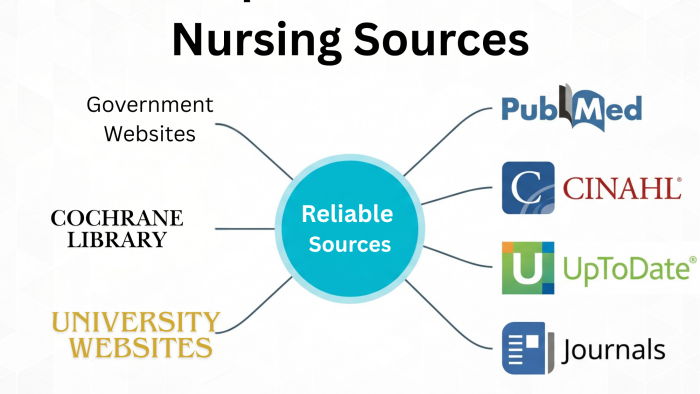
Reliable sources are resources you can trust to provide accurate, unbiased, and relevant nursing and healthcare information. They are typically written by nursing experts, supported by evidence, and published through credible platforms like journals, government agencies, or professional organizations. Credible sources should be published within the past 5 years, follow appropriate assignment criteria, and demonstrate relevance to the nursing practice problem
11 Examples of Reliable Sources for Nursing Projects
When writing a high-quality nursing paper, the strength of your argument often depends on the credibility of your sources. In nursing, where evidence-based practice is everything, relying on trustworthy and scholarly material isn’t just recommended—it’s essential. Below are ten reliable sources you can confidently use to build a solid, well-informed nursing paper.
1. PubMed
PubMed is one of the most respected databases for medical and nursing research. Managed by the National Library of Medicine, it offers access to millions of peer-reviewed articles. If you're looking for clinical studies, systematic reviews, or the latest research in healthcare, this is a go-to.

2. CINAHL
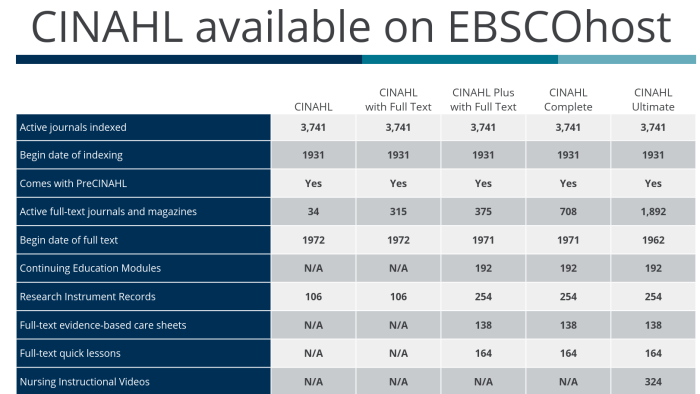
The Cumulative Index to Nursing and Allied Health Literature (CINAHL) is specifically tailored for nursing students and professionals. It includes journals, dissertations, and evidence-based care sheets—perfect for academic nursing assignments.
3. Cochrane Library
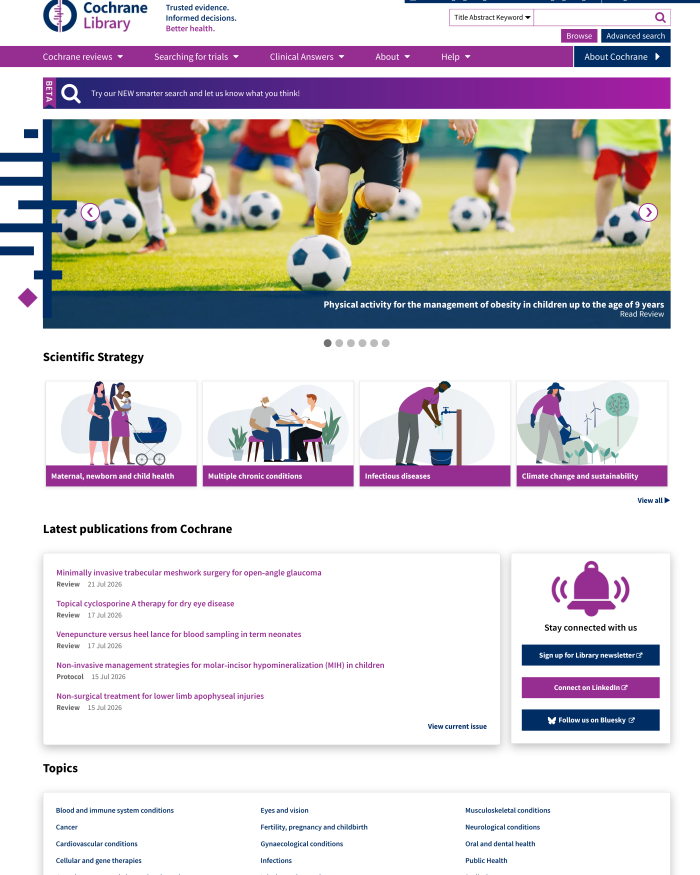
If your paper requires high-level evidence, the Cochrane Library is invaluable. It specializes in systematic reviews and meta-analyses, making it ideal for evidence-based nursing practice and critical analysis.
4. Google Scholar
Google Scholar is a widely accessible tool that indexes scholarly articles across multiple disciplines. While it’s not nursing-specific, it helps you discover peer-reviewed journals, dissertations, and books quickly.
5. World Health Organization
For global health perspectives, statistics, and policy guidelines, WHO is highly reliable. It’s especially useful when your nursing paper focuses on topics related to public health, epidemiology, or global healthcare systems.
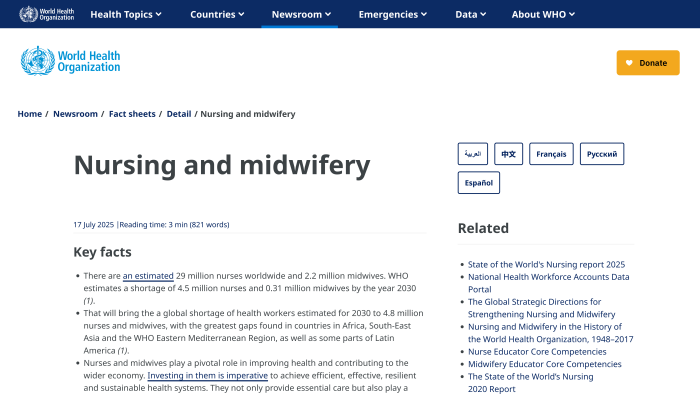
The image above indicates that the WHO provides different article types, including fact sheets, statistical data, emergencies, podcasts, and tools and toolkits.
While using this website, a researcher can explore and gather health and nursing information regarding a specific continent and country.
The WHO supports major languages, including English, Spanish, Arabic, Russian, and French. Thus, the resource embraces diversity and inclusivity by allowing people to explore multilingual articles.
6. Centers for Disease Control and Prevention
The CDC provides up-to-date data on diseases, prevention strategies, and health guidelines. It’s an excellent source for epidemiological data and evidence-based recommendations.
7. National Institutes of Health
NIH is a powerhouse of medical research. It publishes studies, clinical trial results, and health information that can add strong scientific backing to your nursing paper.
8. Nursing and Midwifery Council
For professional standards, ethical guidelines, and scope of practice, the NMC is a trusted authority—particularly useful when discussing nursing ethics or professional conduct.
9. American Nurses Association
The ANA provides position statements, practice standards, and policy updates. It’s a great source when your paper involves nursing leadership, advocacy, or professional issues.
10. Peer Reviewed Journals
These resources are journal articles published only when their content is evaluated by subject experts working in the same field. The experts review a resource and determine whether the study methodology, findings, conclusions, and references are properly documented and meet certain standards in nursing research.
A nursing student researching evidence-based practice using the current literature can use peer-reviewed journals to support their claims and build expertly synthesized evidence. The best sources of reliable answers are systematic reviews and meta-analyses that provide relevant, up-to-date evidence. The advanced nursing journal is a good example of a reliable form of evidence for studies
Academic journals like the Journal of Advanced Nursing publish cutting-edge research and critical discussions in the field. Using journal articles strengthens the academic credibility of your work significantly.
11. University Websites
Most college and university websites publish resources that help students gain knowledge about nursing concepts and practice. These academic institutions work with experts who use their skills and nursing backgrounds to create high-quality research. They also use strict criteria to generate, review, and publish research. All research works undergo peer review before they are made available to the public.
Spotting Criteria
Since a source is not automatically reliable just because it looks academic, you need to evaluate it.
Factors that Determine Whether a Source is Reliable and Credible
1. Currency
In nursing, using up-to-date information is essential because clinical practices and guidelines change rapidly. All sources used should not be older than the acceptable nursing program standards, unless otherwise stated by your professor. In most programs, a reliable source should ideally be published within the last 5 years, especially for topics related to patient care or treatment. Outdated information can weaken your argument and may not reflect current evidence-based practice.
2. Relevance
A source must directly address your research topic rather than just being loosely connected to it. Strong nursing papers rely on sources that clearly support the specific issue being discussed. Choosing relevant material helps keep your argument focused, clear, and academically strong.
3. Objectivity
Reliable sources present information in a balanced and unbiased way, focusing on facts rather than opinions. You should avoid sources that use emotional language or try to persuade without evidence. Institutions like the World Health Organization are trusted because they provide neutral, research-based information.
4. Accuracy
Accuracy means the information is supported by evidence, references, and credible research. Reliable nursing sources are often peer-reviewed and based on scientific studies rather than personal views. Databases such as PubMed are widely used because they ensure high standards of accuracy.
5. Authority
The credibility of a source depends heavily on the qualifications and expertise of the author or organization. Sources written by healthcare professionals, researchers, or recognized institutions carry more weight. For example, guidance from the American Nurses Association is considered highly authoritative in nursing practice.
6. Project Topic
Every source you include should have a clear purpose in supporting your argument or explaining a concept. Reliable writing is intentional, meaning each reference contributes directly to your discussion. Including unnecessary or unrelated sources can weaken the overall quality of your paper.
7. Professor’s Instructions
Your lecturer’s guidelines define what is considered acceptable for your assignment. Even credible sources may be unsuitable if they do not meet specific requirements such as publication date or peer-review status. Following these instructions ensures your nursing literature review or any other work meets academic standards and avoids unnecessary loss of marks.

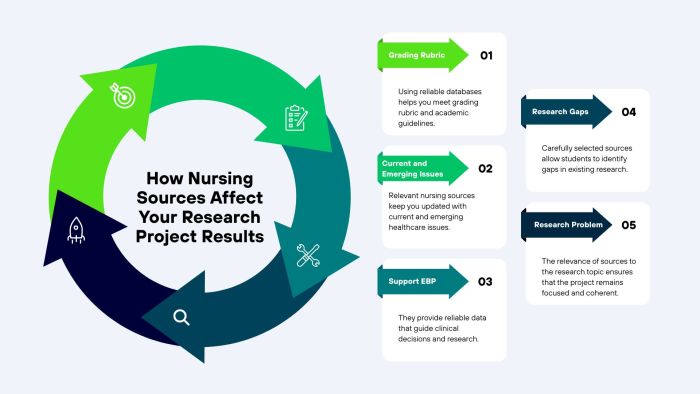
How Nursing Sources Affect Your Research Project Results
1. Meeting the Grading Rubric
Nursing sources directly influence how well a student meets the grading rubric because most academic guidelines require recent, peer-reviewed, and evidence-based references. Using databases such as PubMed, CINAHL, and Cochrane Library helps ensure that the sources are credible and acceptable. When inappropriate or outdated sources are used, the project may fail to meet academic standards despite good writing.
2. Identifying Current and Emerging Issues
Relevant nursing sources help students stay updated with current and emerging healthcare issues that shape modern practice. Topics such as telehealth, remote monitoring, nurse burnout, concierge nursing practice, and digital health innovations are often highlighted in recent studies and are essential for producing meaningful research. Incorporating these sources ensures that the project reflects real-world nursing challenges and remains academically relevant.
3. Supporting Evidence-Based Practice (EBP)
High-quality nursing sources strengthen evidence-based practice by providing reliable data from peer-reviewed studies and clinical research. Sources such as systematic reviews and randomized controlled trials offer strong evidence that can guide clinical decisions and improve patient outcomes. When students answer PICOT questions or base their arguments on such evidence, their research becomes more credible and professionally sound.
4. Identifying Research Gaps
Carefully selected sources allow students to identify gaps in existing research, which is essential for justifying their study. By reviewing literature, students can discover areas that are under-researched, such as specific populations or regional healthcare issues. This not only strengthens the research purpose but also demonstrates analytical and critical thinking skills.
5. Matching Source Relevancy to the Project Title or Research Problem
The relevance of sources to the research topic ensures that the project remains focused and coherent. Each source should directly contribute to the research question or objectives, avoiding unnecessary or unrelated information. Using irrelevant sources can weaken the argument and reduce the overall quality of the research project.
6. Meeting Institutional Requirements
Different institutions often have specific requirements regarding the type, number, and recency of sources used in research projects. Some colleges may require the use of particular databases, citation styles, or publication years to ensure academic consistency. Following these guidelines is essential for meeting academic expectations and achieving higher grades.
7. Matching the Proposed Bibliographical List
In some courses, nursing students can propose a nursing problem and a list of sources to be used for the final project. Well organized research paper is connected to evaluations written in the annotated bibliography for your research project. Consistency in referencing style and sources enhances the professionalism and reliability of the entire nursing assignment.
Why Ai generated Sources are not Reliable for Nursing Research
AI-generated content may sound confident, but it often contains false or outdated medical information. Nursing research demands evidence that has been reviewed and verified by qualified healthcare professionals.
Unlike peer-reviewed journals, AI tools are not held accountable for the accuracy of their responses. Many professors and institutions specifically prohibit the use of AI-generated content in nursing homework.
AI systems are trained on internet data, which frequently includes inaccurate or low-quality health content. Because AI cannot access real-time databases, clinical guidelines it references may already be outdated.
Evidence-based practice requires sources with traceable authors, publication dates, and methodology sections. AI-generated text lacks all of these features, making it impossible to verify or properly cite.
Patient safety depends on nurses applying knowledge that comes from tested and well-documented research. Using AI as a nursing source puts both the student’s grade and professional credibility at serious risk.
Trusted databases like PubMed and CINAHL are specifically built to support accurate and current nursing research. Students who rely on AI risk submitting papers that do not meet the standards required for academic success.
Frequently Asked Questions About Nursing Sources
What is backward citation in nursing and healthcare research?
Backward citation research is a method that involves finding older studies by reviewing the references listed and used in a research article. It enables students, scholars, and nursing researchers to trace the development of a topic and discover foundational sources that influenced the outcomes of the current study.
What are reliable sources for research papers?
Reliable sources for research papers include peer-reviewed journals, government websites, and professional organizations. Databases such as PubMed and CINAHL provide nursing students with high-quality, verified research materials.
What are reliable sources of health information?
The World Health Organization, CDC, and NIH are among the most trusted sources of health information. These organizations publish evidence-based guidelines that are regularly reviewed and updated by medical experts.
Why are primary sources reliable
Primary sources are reliable because they present original data collected directly through studies and experiments. Reading the original research allows nurses to assess the quality of the evidence for themselves.
Why are university sources reliable?
University sources are reliable because academic institutions apply strict standards when producing and publishing research. Faculty members and researchers at universities go through peer review before their findings are made public.
How can I find reliable sources for my research?
Start by searching academic databases like PubMed, Google Scholar, or your university’s library portal. Filtering results to show only peer-reviewed articles published within the last five years helps ensure quality.
Why are blogs not considered reliable sources?
Blogs are usually written by individuals who may not have formal training or expertise in nursing and healthcare. Unlike academic journals, blog posts are not reviewed by experts before they are published online.
Are .org sources reliable?
Some .org websites are reliable, especially those run by established health organizations and professional associations. However, anyone can register a .org domain, so always evaluate the author and content carefully before use.
How to tell if sources are reliable?
Check whether the source has a named author with credentials, a publication date, and a list of references. Reliable sources are also published on credible platforms and do not use emotional or biased language.
What are the most reliable news sources?
For health-related news, outlets like Reuters Health, BBC Health, and MedPage Today follow journalistic standards closely. These sources cite medical experts and verified studies, making them more trustworthy than general news platforms.
Why Wikipedia is not a reliable source of nursing research?
Wikipedia allows anyone to edit its content, meaning medical information posted there can be inaccurate or misleading. Nursing assignments require sources that have been reviewed by experts, which Wikipedia does not guarantee. For more information, read whether it is okay to use Wikipedia for research work.
Is the national institute of health (NIH) a reliable source?
Absolutely, the NIH is widely recognized as one of the most reliable sources for medical and health information. As a leading federal government research agency, it provides evidence-based content developed and reviewed by medical experts and scientists.
Its resources are trusted globally for accurate, up-to-date information on diseases, treatments, public health, and scientific research. Since the NIH works with universities, hospitals, and scientists worldwide, it provides resources with current medical findings and public health guidance.