


18 Best Google Scholar Alternatives for Researchers in 2026
Google Scholar helps students and researchers find academic papers quickly and for free. It searches across journals, theses, books, and conference papers from many publishers. Many nursing and healthcare writers still wonder if other tools serve them better.
This article explains what Google Scholar is, how it ranks results, and why some researchers explore other options. It then reviews eighteen strong alternatives, shares twenty search tips, and compares citation tools side by side. Readers will also find screenshot guidance for building a polished, visual final document.
What Is Google Scholar and How It Started?
Google Scholar launched in November 2004 as a free academic search tool from Google. It was created to help scholars find peer-reviewed papers, theses, books, and abstracts across many disciplines. The tool grew from Google's core search technology, adapting it for academic content instead of general web pages.
Unlike commercial databases, Google Scholar never charged users a subscription fee to search. It expanded quickly because it indexed content from university repositories, publisher sites, and professional societies. Today it remains one of the most visited academic search engines among students worldwide.
How Google Scholar Works Behind the Scenes
Google Scholar uses web crawlers similar to those used by regular Google Search. These crawlers scan university websites, publisher databases, and open repositories for scholarly documents. The system then extracts metadata such as titles, authors, publication dates, and citation counts.
It organizes this information so users can search by keyword, author name, or publication year. Search results are ranked using a mix of relevance signals rather than simple chronological order. This ranking approach means older, highly cited papers often appear above newer, less-cited ones.
Some results link straight to a free PDF, while others only show an abstract behind a paywall. This mixed access pattern frustrates many nursing students working under tight assignment deadlines. Understanding this pattern early helps researchers plan extra time for locating full-text copies.
Seven Reasons to Consider Other Search Options
Many researchers eventually look beyond Google Scholar for a handful of practical reasons. Below are seven common reasons nursing and healthcare writers give for trying alternative platforms. Each reason reflects a real gap that a specialized database often fills better.
Limited peer-review filtering. Google Scholar mixes peer-reviewed articles with theses, preprints, and unreviewed reports without clearly labeling each type.
Inconsistent full-text access. Many results link to paywalled articles, forcing researchers to search elsewhere for a readable copy.
Duplicate and outdated entries. The index sometimes lists multiple versions of the same paper, including outdated preprint drafts.
Weak subject-specific filtering. Nursing and healthcare researchers often need clinical filters that Google Scholar simply does not offer.
Citation count inflation. Some citation counts include self-citations or citations from low-quality sources, skewing perceived importance.
No structured database fields. Unlike CINAHL or PubMed, Google Scholar lacks controlled vocabulary and subject headings for precise searching.
Privacy and tracking concerns. Because it runs on a Google account, some researchers prefer tools with fewer data-tracking requirements.
Inside Google Scholar's Ranking Algorithm
Google Scholar's ranking system weighs several factors before deciding which papers appear first. It blends six distinct signals to sort millions of documents into a single results list. Understanding each factor helps researchers predict why certain papers appear above others.
Keyword Relevance
Keyword relevance still matters, so titles and abstracts containing the exact search terms tend to rank higher. Papers that repeat the search phrase in their title receive a noticeable ranking advantage over vaguer matches.
Citation Counts - Citation counts carry significant weight, meaning frequently cited papers often outrank newer, uncited research. This approach favors established, widely referenced studies over recent work that has not yet accumulated citations.
Author Credibility
The algorithm also considers author credibility, favoring researchers with established publication histories and institutional affiliations. A well-known author's new paper can rank higher than an equally relevant paper from an unknown writer.
Publication Date
Publication date plays a smaller role, though very recent papers can still rank well if uploaded to trusted repositories. Recency alone rarely outweighs strong citation counts or author reputation in the final ranking.
Publisher Reputation
Publisher reputation matters too, since journals from recognized academic publishers receive a modest ranking boost. Papers published through respected, peer-reviewed outlets tend to edge out those from lesser-known or self-published sources.
Full-Text Similarity
Finally, the system checks full-text similarity, comparing document content against other indexed papers to detect duplicates. This comparison helps reduce clutter from near-identical preprint and published-version pairs. Together, these six signals explain why some highly relevant papers rank lower than expected.
Is Google Scholar Reliable for Nursing Research
Google Scholar is not a curated database, so it cannot guarantee every listed article passed peer review. It indexes preprints, conference abstracts, student theses, and working papers alongside true peer-reviewed journal articles. For nursing research specifically, this mixing creates real risk, since clinical decisions require rigorously vetted evidence.
Nursing students should cross-check any Google Scholar result against a dedicated database like CINAHL or PubMed. Those databases apply structured indexing and clearer peer-review labeling that Google Scholar does not provide. Always verify publication details directly on the journal's own website before citing a source in coursework.
A quick habit helps here: open the journal's editorial policy page before trusting any single search result. Reputable nursing journals openly describe their peer-review process, editorial board, and manuscript acceptance standards. This extra step takes only a few minutes and meaningfully lowers citation risk.
Eighteen Websites Similar to Google Scholar
The platforms below each offer something Google Scholar does not, from stricter peer-review filters to nursing-specific indexing. Some focus on general research, while others target nursing, healthcare, or education topics directly. Reading each entry helps match the right tool to a specific research need.
1. PubMed: The Free Biomedical Literature Database
PubMed is a free database maintained by the National Library of Medicine for biomedical and life sciences literature. It indexes millions of citations from MEDLINE, life science journals, and online books with strong subject tagging. Nursing researchers rely on PubMed heavily because it uses controlled vocabulary called MeSH terms for precise searching.

2. CINAHL: The Core Nursing and Allied Health Index
CINAHL, the Cumulative Index to Nursing and Allied Health Literature, is a subscription database built specifically for nursing research. It indexes nursing journals, dissertations, and evidence-based care sheets that general search engines rarely capture well. Most nursing schools provide student access through their library subscription portals.

3. Cochrane Library: Trusted Systematic Reviews
The Cochrane Library publishes systematic reviews and meta-analyses considered a gold standard in evidence-based healthcare. Nursing and medical researchers use it to find rigorously reviewed summaries of clinical trial evidence. Each review follows a strict, transparent methodology that reduces bias compared to single studies.

4. Emerald Insight: Business and Management Research
Emerald Insight hosts journals covering management, healthcare administration, education, and social sciences research. Many healthcare leadership and nursing management articles appear in its collection of peer-reviewed titles. Institutional subscriptions typically grant full-text access, though some abstracts remain free to the public.

5. ProQuest: Dissertations and Multidisciplinary Content
ProQuest aggregates dissertations, theses, newspapers, and journal articles across nearly every academic discipline. Its dissertation database is especially valuable for nursing graduate students researching prior thesis work. Full-text access usually requires a university or public library subscription login.

6. EBSCOhost: A Multi-Database Research Platform
EBSCOhost bundles many specialized databases, including CINAHL and MEDLINE, into a single search interface. Students often start a research project in EBSCOhost because it lets them search several nursing databases at once. Its citation export tools support APA, MLA, and Chicago formatting automatically.

7. Scribd: Shared Documents and Academic Papers
Scribd is a subscription reading platform hosting user-uploaded documents, including some academic papers and study guides. Content quality varies widely since uploads are not peer reviewed or professionally vetted. Researchers should treat Scribd as a starting point rather than a primary academic source.

8. ResearchGate: A Social Network for Researchers
ResearchGate lets academics upload their own papers, ask questions, and connect directly with other researchers worldwide. Many authors share full-text copies of published articles that would otherwise sit behind a paywall. Researchers can also message authors directly to request unpublished or hard-to-find data.

9. NAEYC.org: Early Childhood Education Resources
The National Association for the Education of Young Children publishes research on child development and early education practice. While not a general academic database, it offers peer-reviewed articles relevant to pediatric nursing and family health topics. Its journal, Young Children, is a respected source for practitioners in early childhood settings.

10. ERIC: The Education Resources Information Center
ERIC is a free database sponsored by the U.S. Department of Education, focused on education research and practice. Nursing educators often use it to find literature on clinical teaching methods and curriculum design. Most records link directly to free full-text PDFs hosted by the original publisher.

11. JSTOR: A Multidisciplinary Digital Archive
JSTOR archives back issues of academic journals across the humanities, social sciences, and some health disciplines. It is particularly strong for historical research and older foundational papers not easily found elsewhere. Many universities provide free student access, though public users face limited free article views.

12. Scopus: Elsevier's Citation and Abstract Database
Scopus is a subscription database from Elsevier covering science, technology, medicine, and social science journals. It provides detailed citation metrics, author profiles, and institutional research rankings used in academic evaluations. Many universities use Scopus data to measure faculty research output and publication impact.

13. Web of Science: A Long-Standing Citation Index
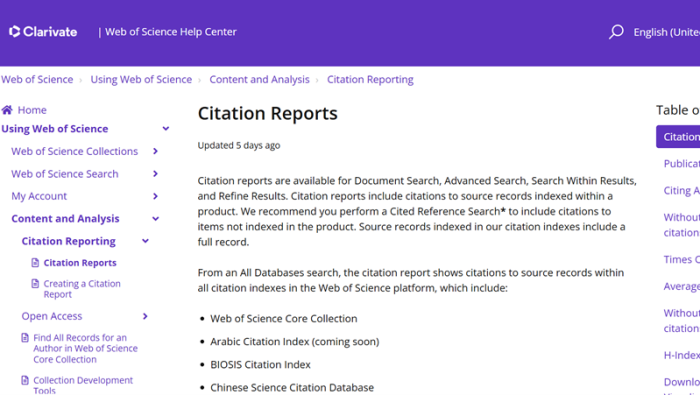
Web of Science is one of the oldest citation databases, tracking references across science and social science journals. It calculates impact factors and citation metrics that many universities use for tenure and promotion decisions. Its Core Collection focuses on journals meeting strict editorial and peer-review standards.
14. ScienceDirect: Elsevier's Full-Text Journal Platform
ScienceDirect hosts full-text articles from thousands of Elsevier-published journals across science, technology, and medicine. Nursing researchers use it to access clinical studies published in respected medical and health science journals. Many articles remain behind a paywall unless the researcher's institution holds a subscription.

15. SpringerLink: Springer's Academic Content Hub
SpringerLink hosts journals, books, and reference works published by Springer Nature across many academic fields. It includes a large collection of nursing, medicine, and public health journals with searchable full text. Open-access articles are clearly labeled, making it easier to find freely readable research.

16. Semantic Scholar: An AI-Powered Research Tool
Semantic Scholar, built by the Allen Institute for AI, uses machine learning to summarize and connect research papers. It highlights influential citations and generates short summaries to help readers judge relevance quickly. The platform is completely free and covers computer science, medicine, and biology heavily.

17. BASE: A Massive Open-Access Search Engine
BASE, the Bielefeld Academic Search Engine, indexes millions of open-access documents from repositories around the world. It offers detailed filters for document type, access rights, and publication year not found on Google Scholar. Researchers appreciate its transparency about which sources are genuinely free to read.

18. DOAJ: The Directory of Open Access Journals
DOAJ maintains a curated list of peer-reviewed, open-access journals that meet strict quality and transparency criteria. Every journal listed has been manually reviewed before inclusion, reducing the risk of predatory publishing. Nursing researchers use it to confirm whether an open-access journal is legitimate before submitting work.
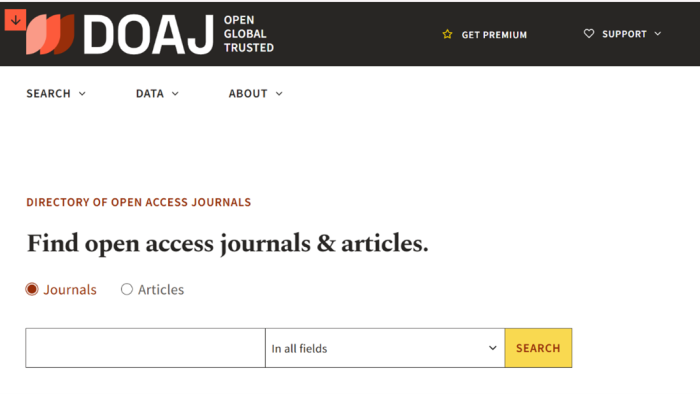
Table Summary: Websites like Google Scholar
# | Website | Description |
1 | PubMed | Free NLM database for biomedical/life sciences literature; uses MeSH terms for precise nursing searches |
2 | CINAHL | Subscription database built for nursing and allied health research; strong subject-heading filters |
3 | Cochrane Library | Publishes systematic reviews and meta-analyses; gold standard for evidence-based healthcare |
4 | Emerald Insight | Journals on management, healthcare administration, education, and social sciences |
5 | ProQuest | Aggregates dissertations, theses, newspapers, and journals across disciplines |
6 | EBSCOhost | Bundles CINAHL, MEDLINE, and other databases into one search interface |
7 | Scribd | User-uploaded documents and papers; quality varies, not peer reviewed |
8 | ResearchGate | Social network where researchers share full-text papers and connect directly |
9 | Early childhood education research; relevant to pediatric and family health topics | |
10 | ERIC | U.S. Dept. of Education database for education research and teaching methods |
11 | JSTOR | Archive of back-issue journals; strong for humanities and historical research |
12 | Scopus | Elsevier database with citation metrics and author/institution rankings |
13 | Web of Science | Long-standing citation index; calculates impact factors for tenure decisions |
14 | ScienceDirect | Elsevier's full-text platform for science, technology, and medicine journals |
15 | SpringerLink | Springer Nature's journals and books, with clearly labeled open-access articles |
16 | Semantic Scholar | AI-powered tool that summarizes papers and highlights key citations |
17 | BASE | Bielefeld Academic Search Engine; indexes millions of open-access documents |
18 | DOAJ | Curated directory of peer-reviewed open-access journals, vetted for quality |
These eighteen platforms share one common thread: each fills a specific gap that Google Scholar leaves open.
Nursing-focused tools like CINAHL and Cochrane offer clinical depth, while Semantic Scholar and BASE add modern discovery features.
Choosing the right combination depends entirely on the researcher's subject area and access level.
Twenty Tips for Better Google Scholar Searches and Its Website Alternatives
A few small habits can dramatically improve the quality of Google Scholar search results. These twenty tips cover search syntax, filtering options, and account features many students overlook. Applying even five or six of these tips will noticeably speed up any literature search.
Use quotation marks around exact phrases to narrow overly broad search results.
Add the minus sign before words to exclude irrelevant topics from your results.
Search author names in quotes to find a specific researcher's full publication list.
Use the "Since Year" filter to limit results to the most recent research.
Click "Cited by" to trace how later studies built on an older paper.
Set up citation alerts to receive email updates on new related research.
Use the star icon to save useful articles directly into your library folders.
Try the "Related articles" link to discover papers on a similar topic.
Search within a specific journal by adding "source:" before the journal name.
Combine keywords with "AND" and "OR" to refine complex, multi-topic searches.
Check the "All versions" link to find a free full-text copy of an article.
Use library links settings to connect Google Scholar with your university's subscriptions.
Search by publication title using quotation marks for exact article name matches.
Filter by document type when looking specifically for case studies or reviews.
Use Boolean operators sparingly, since Google Scholar handles them inconsistently at times.
Review the sidebar PDF link before assuming an article requires paid access.
Sort results by date instead of relevance for fast-moving research topics.
Check author profiles for a full list of verified, self-curated publications.
Cross-check high citation counts against Scopus or Web of Science for accuracy.
Bookmark search strings you use often to save time on repeated projects.
Google Scholar rewards researchers who search with real intention rather than typing random keywords and hoping for relevant results. Small adjustments to search syntax, filtering options, and account settings can transform a frustrating search into a fast, productive one.
The above twenty tips cover practical techniques nursing and healthcare writers can apply immediately, from exact-phrase searching to citation alerts and library integrations.
Mastering even a handful of these habits saves research time, improves result relevance, and helps writers locate full-text sources more reliably across every academic project they take on.
Reference Formatting Pros and Cons Explained
Google Scholar offers a built-in "Cite" button that generates references in MLA, APA, Chicago, Harvard, and Vancouver styles. This feature saves time for students who need a quick citation without opening a separate reference manager. However, the generated citations do not always follow MLA 8 formatting rules with complete accuracy.
Missing page numbers, inconsistent capitalization, and incorrect author formatting appear frequently in exported citations. Library guides from several universities confirm that manual verification remains necessary before submitting any citation. Students should always check the citation formatting carefully against an official MLA handbook before finalizing a paper.
Pros:
Saves time by generating multiple citation styles instantly.
Supports export to reference managers like EndNote and Zotero.
Requires no separate account or paid subscription to use.
Cons:
Frequently omits page numbers or publisher details.
Formatting does not always match the latest MLA 8 edition.
Cannot fix errors already present in the source's own metadata.
Citation Tools Compared: Scholar vs Citefast vs Sourcely
Students often ask which citation tool produces the most reliable, ready-to-use reference list. The table below compares Google Scholar's built-in citation feature against two popular dedicated tools. Each option balances speed, accuracy, and manual control differently.
Feature | Google Scholar | Citefast | Sourcely |
Citation styles | MLA, APA, Chicago, Harvard, Vancouver | APA, MLA, Chicago | APA, MLA, Chicago, Harvard |
Cost | Free | Free | Freemium |
Manual entry option | No | Yes | Yes |
Bulk export | Limited | Yes | Yes |
Best for | Quick single citations | Full reference lists | Source discovery plus citing |
Frequently Asked Questions (FAQs) About Google Scholar
Is everything on Google Scholar peer reviewed? No, Google Scholar indexes theses, preprints, and reports alongside peer-reviewed journal articles. Users must check each source individually to confirm its peer-review status.
How does Google Scholar work? It crawls academic websites and repositories, then ranks results using citations, relevance, and author credibility. This process resembles regular Google Search but focuses only on scholarly content.
Is everything on Google Scholar up to date? Not always, since indexing depends on when crawlers revisit a given website or repository. Some recently published papers can take weeks to appear in search results.
Is Google Scholar a search engine? Yes, it functions as a specialized search engine rather than a licensed academic database. It searches publicly available and partner-provided scholarly content across the web.
Is Google Scholar a database? Not in the traditional sense, since it lacks controlled vocabulary and structured subject indexing. Databases like CINAHL or PubMed offer that structured approach instead.
Does Google Scholar provide article DOIs? Sometimes, though DOI display depends on whether the original publisher included that metadata. Users often need to visit the publisher's page directly to confirm the DOI.
What is Google Scholar case law? It is a free section of Google Scholar covering United States court opinions and legal case citations. Law students and healthcare policy researchers use it to research legal precedent.
How does Google Scholar Labs work? Google Scholar occasionally tests experimental features, sometimes called labs, before rolling them out publicly. These features have included AI-assisted summaries and improved author disambiguation tools.
Final Verdict and Recommendations for Readers
Google Scholar remains a strong starting point for quick, free academic searches across nearly every discipline. It cannot fully replace specialized databases like CINAHL, PubMed, or Cochrane Library for nursing research needs. Emerging trends point toward more AI-assisted summarization tools, similar to what Semantic Scholar already offers today.
Future versions of academic search may blend citation tracking with automated evidence grading for clinical relevance. Nursing students should treat Google Scholar as a discovery tool, then confirm sources in dedicated databases. Combining several platforms from this list will produce more reliable, well-rounded research results overall.